
Criminal Cases in the Palo Pinto County Courts
Palo Pinto County criminal cases are divided by jurisdiction. The 29th Judicial District Court hears felonies, and the District Clerk keeps those prosecution files. The County Clerk maintains Class A and Class B misdemeanor cases. Municipal courts and five Justice Courts keep their own narrower dockets for fine-only offenses and related warrant matters. Juvenile records are closed. This split matters because one counter cannot supply every criminal court record created inside county lines.
The clerk is the custodian of the filed case, not the arresting agency. Its file can show the charging instrument, plea, motions, settings, signed outcome, and sentence. A sheriff booking entry answers a different question about custody. For a dependable result, ask for a cause number, docket sheet, indictment or information, judgment, dismissal order, and sentence as needed. The broader Palo Pinto County criminal history overview explains how those court records differ from jail and DPS files.
The County Clerk criminal-court page documents the offline access rule. The image below preserves that source context.
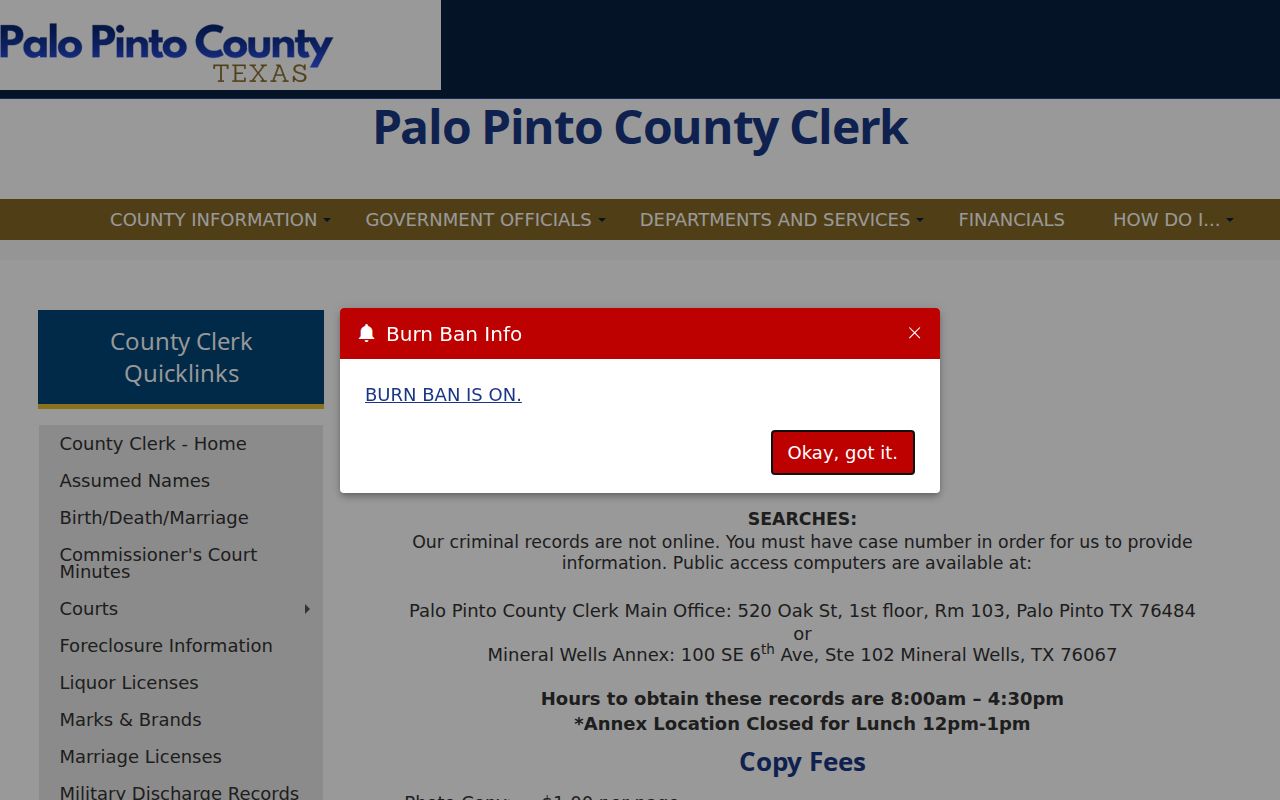
That Palo Pinto notice is the key reason a local case search may require a counter visit and a known cause number.
Palo Pinto County Court Jurisdiction
Start with the allegation shown on the best record already in hand. A felony degree points to the District Clerk. A Class A or B misdemeanor points to the County Clerk. A Class C citation may belong to the city or Justice Court that issued it. The Palo Pinto County department directory helps confirm the named office. This comparison prevents a common local mistake: asking Room 103 for a municipal case or asking a city court for a district felony.
| Case level | Likely court | Record custodian |
|---|---|---|
| Felony | 29th Judicial District Court | Palo Pinto County District Clerk |
| Class A or B misdemeanor | County Court | Palo Pinto County Clerk |
| Fine-only or precinct matter | Municipal or Justice Court | Issuing court clerk |
The District Clerk page supplies the official felony-record contact route. Its captured view follows.
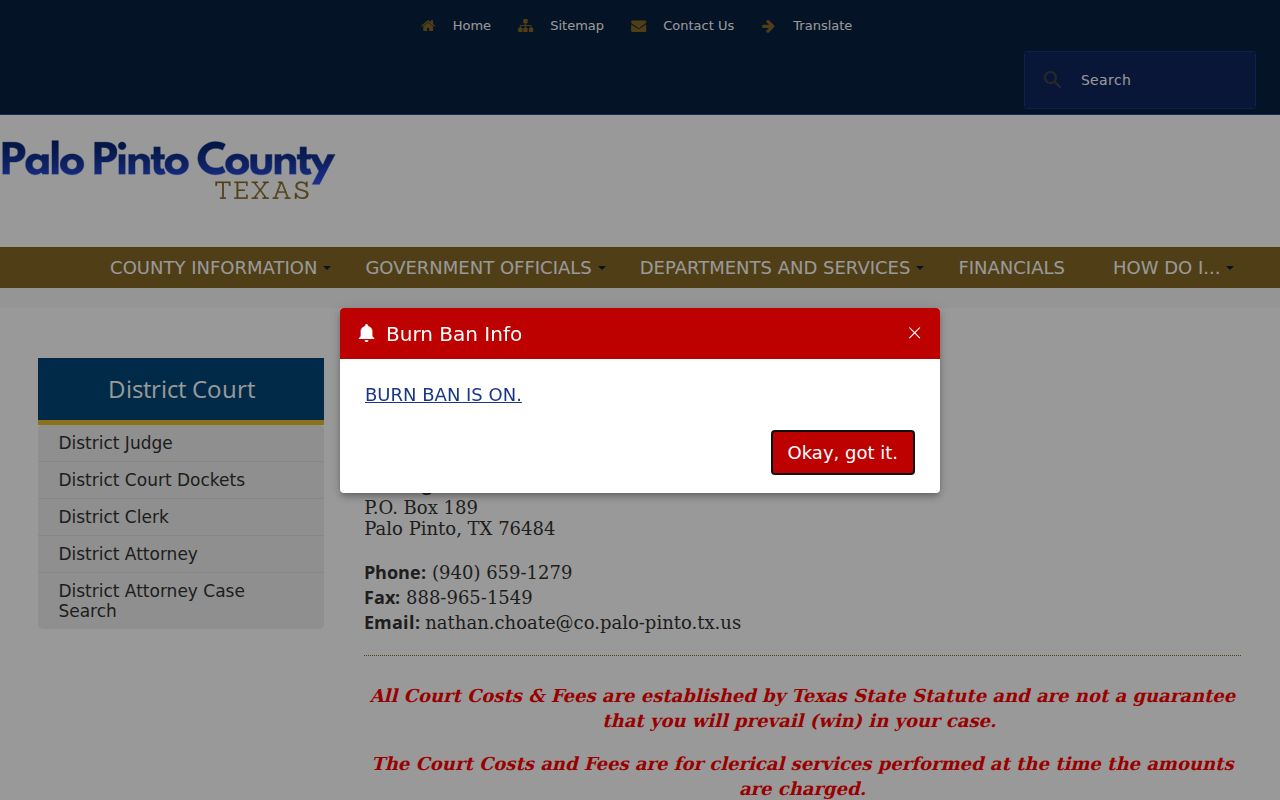
The office accepts official requests by email, but a clear cause number and named document make the request much easier to route.
How to Search Case Records
No county criminal search form is published online. Use the county counter and terminal route first for a Palo Pinto County case, then use a state platform only as a supplement. The courthouse County Clerk counter is in Room 103 at 520 Oak Street, Palo Pinto. A second public terminal is at the Mineral Wells Annex, 100 SE 6th Avenue, Suite 102. Both publish criminal-record hours of 8 a.m. to 4:30 p.m.; the annex closes from noon to 1 p.m.
- Decide whether the matter is a felony, county misdemeanor, or fine-only case.
- Gather the cause number, court, full party name, and approximate filing date.
- Use a County Clerk public computer when a misdemeanor case number is unknown, and ask what index fields the terminal permits.
- For a felony, email the District Clerk at nathan.choate@co.palo-pinto.tx.us or call 940-659-1279 with the known details.
- Name the exact docket sheet, charging paper, judgment, or certified disposition needed.
| Search detail | Use | Published status | Notes |
|---|---|---|---|
| Cause number | Direct file lookup | Required by County Clerk | Most reliable local key |
| Party name | Terminal index help | Fields not posted | Ask clerk what identifiers work |
| Court and case level | Custodian routing | Needed in practice | Separates district, county, city, and JP files |
| Filing date | Narrows search | Helpful | Use an approximate year if exact date is unknown |
A Palo Pinto terminal search only locates the file. Open the docket and request the signed document that answers the question.
Palo Pinto County Case Search Limits
re:SearchTX is the statewide court-document platform, but court participation, user access, and document charges vary. It should not be treated as proof that every Palo Pinto County criminal case or image is online. The County Clerk's direct statement that its criminal records are not online controls the local workflow. If the state search returns nothing, go back to the proper clerk rather than concluding that no case exists.
The platform can still help when a participating court has supplied a searchable item. Use a cause number if one is known, compare the court name carefully, and verify the result against the clerk-held docket. The official re:SearchTX login and search landing page shown below illustrates that separate access layer.
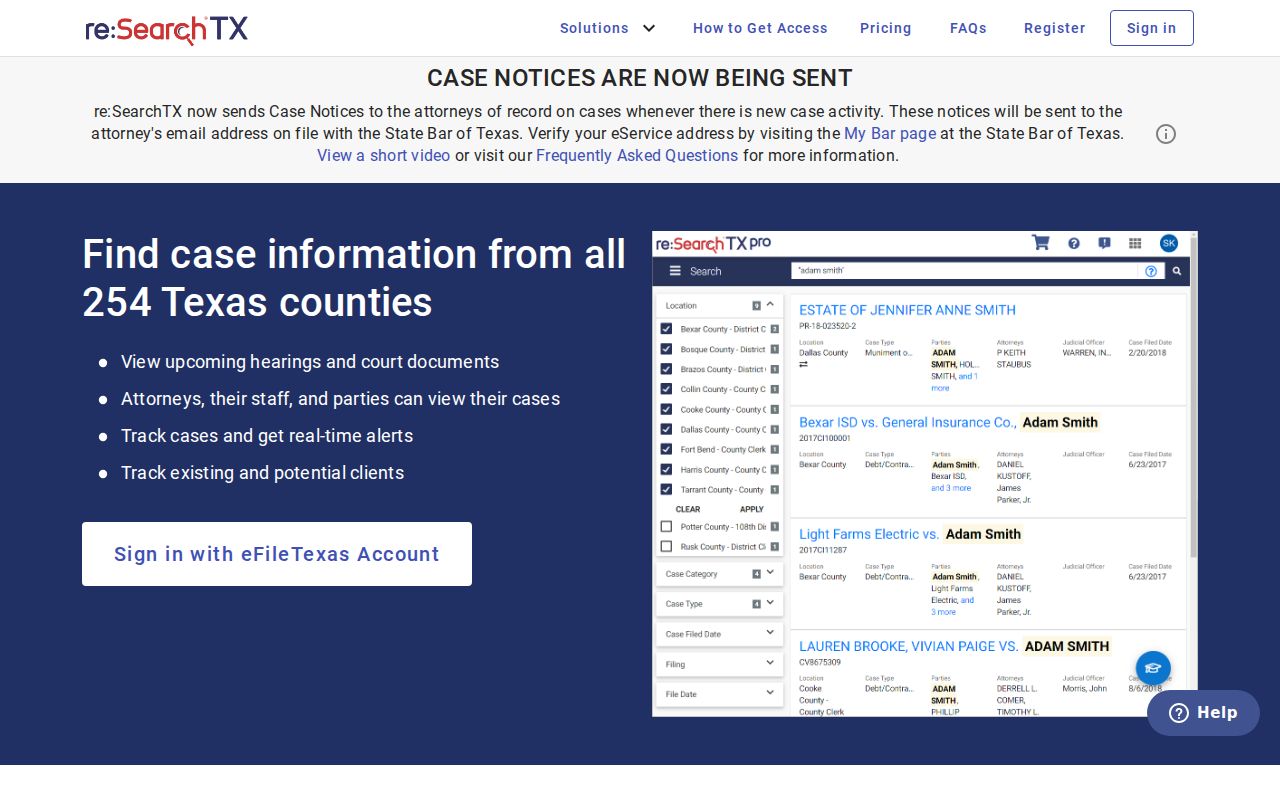
It is a statewide document channel, not a replacement for the county's offline criminal counter.
Note: An empty online result does not establish that a Palo Pinto County criminal court file does not exist.
What the Case File Shows
A Palo Pinto County case file follows the prosecution after charges are filed. It may identify the State of Texas and defendant, attorneys of record, court, filing date, case status, and alleged offense. Docket events can include service or capias, magistration, arraignment, motions, settings, plea or trial, judgment, sentence, and appeal. Some fields or documents can be sealed, closed, or redacted.
| Cause Number and Court | Unique local case key, assigned court, filing date, type, and status. |
|---|---|
| Charging Document | Complaint, information, or indictment with alleged statute and offense level. |
| Docket Entries | Filed motions, settings, service, hearings, pleas, trial events, and orders. |
| Bond | Amount, type, and related filed conditions or orders when public. |
| Disposition and Judgment | Signed conviction, dismissal, acquittal, deferred adjudication, or other outcome. |
| Sentence | Confinement, community supervision, fine, restitution, and costs when ordered. |
The signed disposition is the strongest answer to what happened in the prosecution. A booking charge may change or be dropped before judgment.
Palo Pinto County Certified Case Records
A plain copy from the County Clerk costs $1 per page. A certified copy costs $1 per page plus a $5 certification fee. Published payment choices are cash, a qualifying personal check with driver-license number and phone, debit or credit card, money order, or cashier's check. District Clerk fees are statutory and nonrefundable, but the research did not locate a detailed felony-copy price. Confirm that cost before ordering.
Certification matters when a reader needs the clerk to attest that the copy matches the official file. Ask for a certified judgment, order of dismissal, or disposition rather than a vague "background check." The exact document name reduces delay and helps avoid paying for pages that do not answer the question. Juvenile records remain closed, and other protected material may be withheld.
Stages of a Criminal Case
Arrest and magistration can occur before a prosecutor selects the filed charge. A felony usually proceeds by indictment unless indictment is lawfully waived. A Class A or B misdemeanor commonly proceeds on an information and complaint. Arraignment addresses the plea. Pretrial motions and settings follow, then a negotiated plea or trial, a signed outcome, sentence, and any appeal.
Case flow: Charges Filed › Arraignment › Pretrial › Plea or Trial › Disposition › Sentencing
This sequence explains why the first booking label may not match the final Palo Pinto County judgment. Read dates and entries in order, and treat a setting as an event rather than an outcome. Deferred adjudication means supervised resolution without an initial adjudication of guilt; it is not the same as a dismissal.
Palo Pinto County Federal Court Cases
Palo Pinto County lies in the Northern District of Texas. Federal criminal filings do not sit with either county clerk. Search official federal dockets through PACER, which requires registration and bills under the current federal fee schedule. Quarterly charges of $30 or less are waived. Confirm the assigned federal division before planning a courthouse visit.
The official PACER access page appears below as the source for the federal docket route.
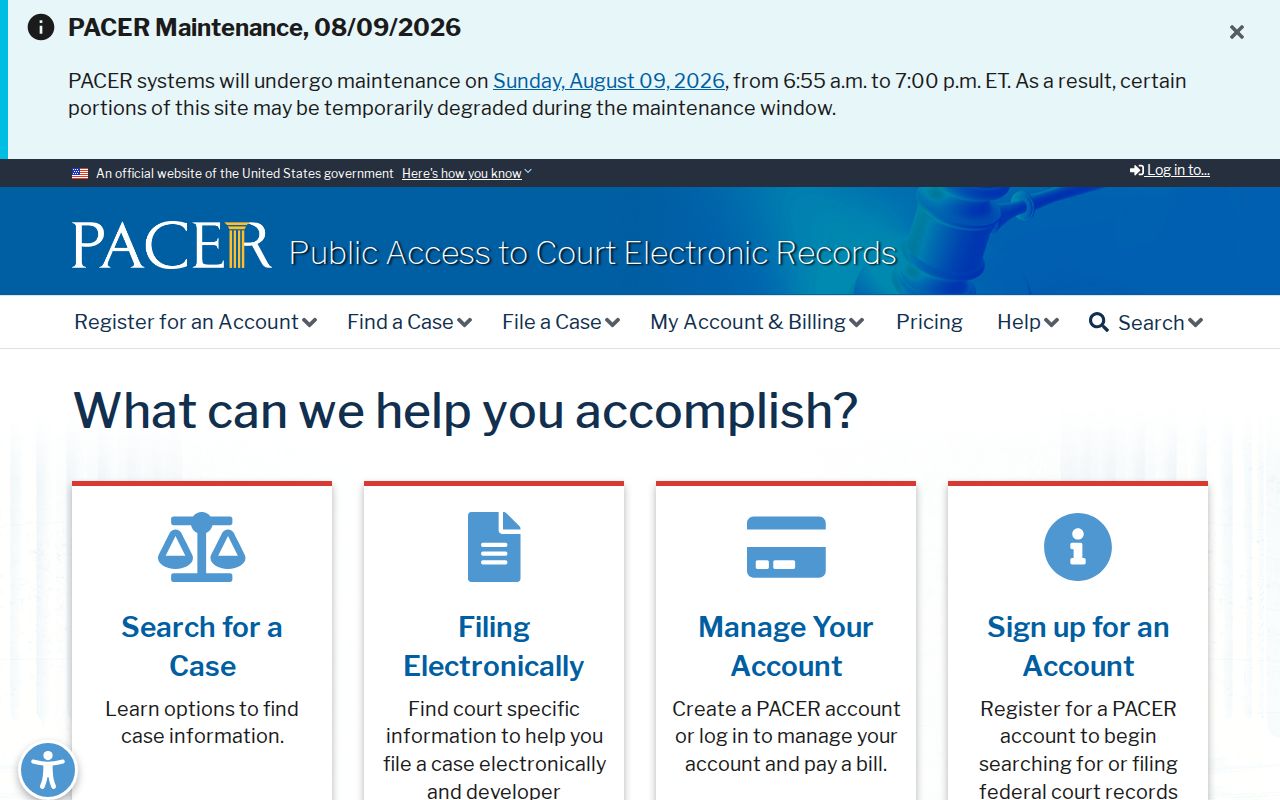
PACER supplies federal case dockets, while the Palo Pinto clerks remain the custodians for local and state prosecutions filed in their courts.
Palo Pinto County Court Access Rules
Texas court records are generally open subject to sealing and confidentiality rules, but legal openness does not guarantee online access. The Texas judiciary rules and access standards supply the statewide framework. A case that proceeds on appeal can also create a separate appellate docket in the Eleventh Court of Appeals. Search that court as a distinct record layer rather than expecting every appellate filing in the trial clerk's online view.
The official Texas rules page is captured below because it supports the difference between public access and electronic availability.
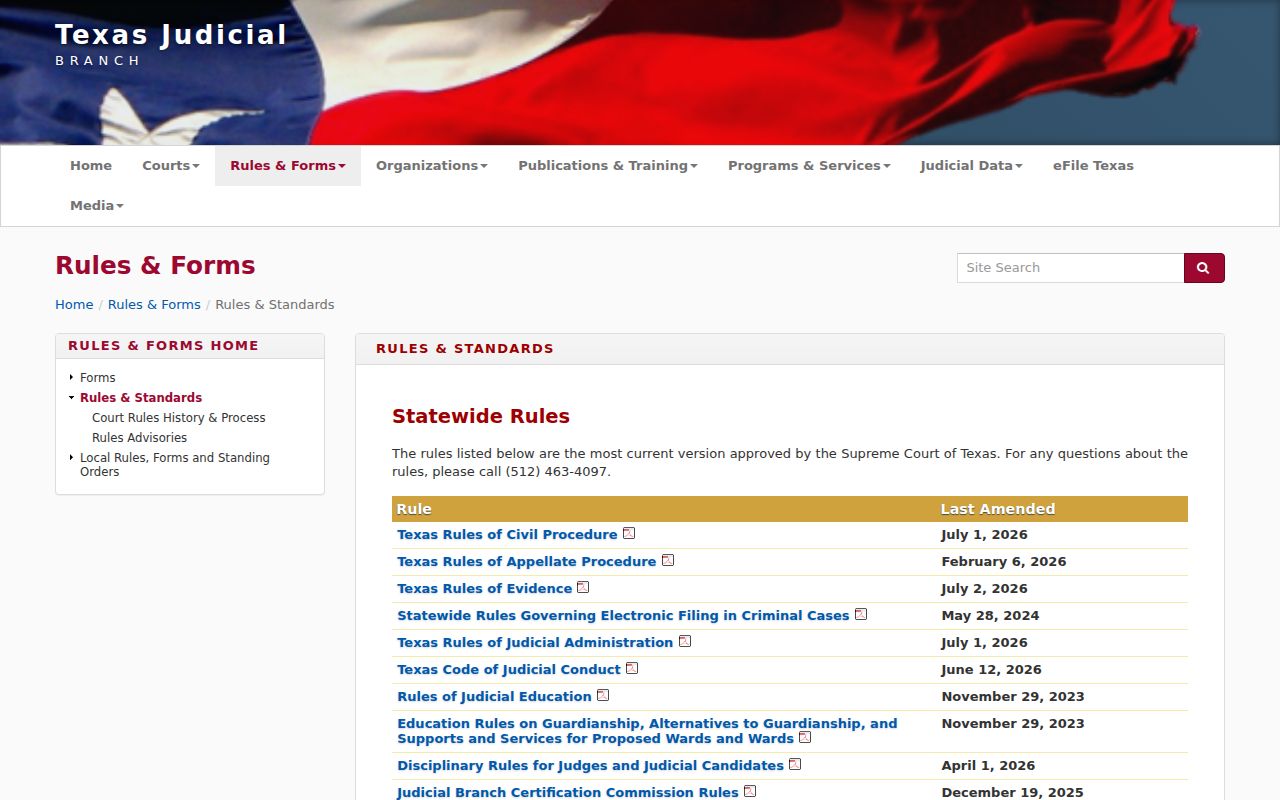
Those standards allow restrictions for sealed, confidential, and juvenile material even when ordinary criminal filings are open.
Access & Restrictions
The Texas Public Information Act generally opens government-held information unless an exception or another law applies. Court access also follows judiciary rules. Yet a clerk may redact protected identifiers, withhold sealed material, and refuse access to closed juvenile files. A missing document can mean it was never filed, is held by another custodian, is restricted, or is not available through the chosen channel.
Ask the clerk whether a public index entry exists, whether the case is in the correct court, and whether a specific order limits disclosure. Do not ask the Sheriff to alter a court docket. Likewise, a court correction does not by itself update a DPS repository record. For expunction or nondisclosure questions, obtain the current clerk packet and compare the facts with current Texas law.
Public does not mean online. Palo Pinto County criminal case files may be open at the proper clerk even when no web search result exists.