
How to Check Criminal History in Graford
Graford does not have one verified city database for criminal history. The useful first clue is often already on a citation, incident card, case notice, or the Palo Pinto County jail roster. Read the agency name before sending a request. A Graford address does not establish that a city officer made the record, especially around Possum Kingdom and other areas where a Graford mailing address may fall outside the incorporated limits.
Use a five-part check so each Graford record request reaches the office that can answer it:
- Identify the responding agency from the paperwork, roster entry, or service number. Do not assume Graford has a standalone police records desk.
- Ask that agency for its incident or arrest report. For a Sheriff response, use the official county information-request channel and give the date and place.
- Check the Palo Pinto County roster when the question is current or recent local custody. The jail record is separate from the incident narrative.
- Route a fine-only matter to the proper local court, including Justice Court Precinct 3 when its jurisdiction fits. Route higher charges to the county clerks.
- Use Texas DPS criminal history only for the statewide public repository record, not as a substitute for a Graford incident report.
Graford Has No Verified Police Portal
No current official standalone Graford police department page, Graford police records form, app, blotter, or city case portal was verified in the project research. That Graford gap matters. It means a searcher should not trust an unofficial page that claims to be the Graford police database, nor should a county Sheriff record be relabeled as a Graford police record.
The practical Graford fallback is direct and document based. Find the agency line on the source record. A Sheriff deputy, constable, DPS trooper, Texas Parks and Wildlife game warden, or Brazos River Authority officer may hold the Graford-area narrative. Each is a separate custodian. Ask the named agency for the existing Graford document and give a tight description instead of asking it to build a new criminal-history summary.
Short version: in Graford, the responding agency decides where the police or incident record lives.
The Graford Police Department
A current independent Graford Police Department records operation was not established by the official sources inspected. Texas DPS agency material also did not establish a separate operating Graford department for incident-based reporting. This does not mean no law-enforcement record exists. It means the label “Graford Police Department” should not be invented when another public agency actually answered the call.
When the Palo Pinto County Sheriff responded, use the Sheriff information-request page. The Sheriff form can describe an offense report, arrest report, mugshot, call for service, or another existing record. Supply the Graford location, date or range, involved names when known, and a service number if the paperwork shows one. If a different agency responded, send the same precise facts to that agency instead.
Note: Sheriff dispatch may serve several agencies, but the agency that created a Graford record remains the proper records custodian.
Graford Addresses Can Mislead Record Searches
Postal geography can trip up a Graford criminal-record search. An address using “Graford” may sit beyond the city boundary, particularly in the wider Possum Kingdom area. A city name on mail is not proof of municipal jurisdiction. The place of the event and the responding badge or agency name are better routing facts.
Start with the most concrete Graford item available. A Graford citation should name the issuing officer and court. A jail entry should identify the arresting or reporting agency. A Graford incident receipt may show a service number. If none is available, give the exact location and date when contacting the Sheriff or relevant precinct office. That makes it easier to distinguish a Sheriff event from work by a constable, state trooper, game warden, or Brazos River Authority officer.
This boundary check saves time because one Graford location can generate records at several levels without ever creating a city police file.
Arrests and Bookings in Graford
No separate Graford holding facility was verified. A person arrested in the Graford area may be transported to the Palo Pinto County jail, where intake creates a booking record apart from the arresting agency’s report. The official county roster separates current inmates, arrests labeled within the last 24 hours, and an archive searched by arrest date.
A Graford booking entry can show custody status, arrest date, reporting agency, total bond, warrant or charge details, and court labels. The Graford-linked entry does not settle guilt or state the final court outcome. The agency narrative explains the reported Graford event, while the signed judgment or dismissal from the right clerk explains what happened in court.
The official custody-notification service provides another custody-related route.
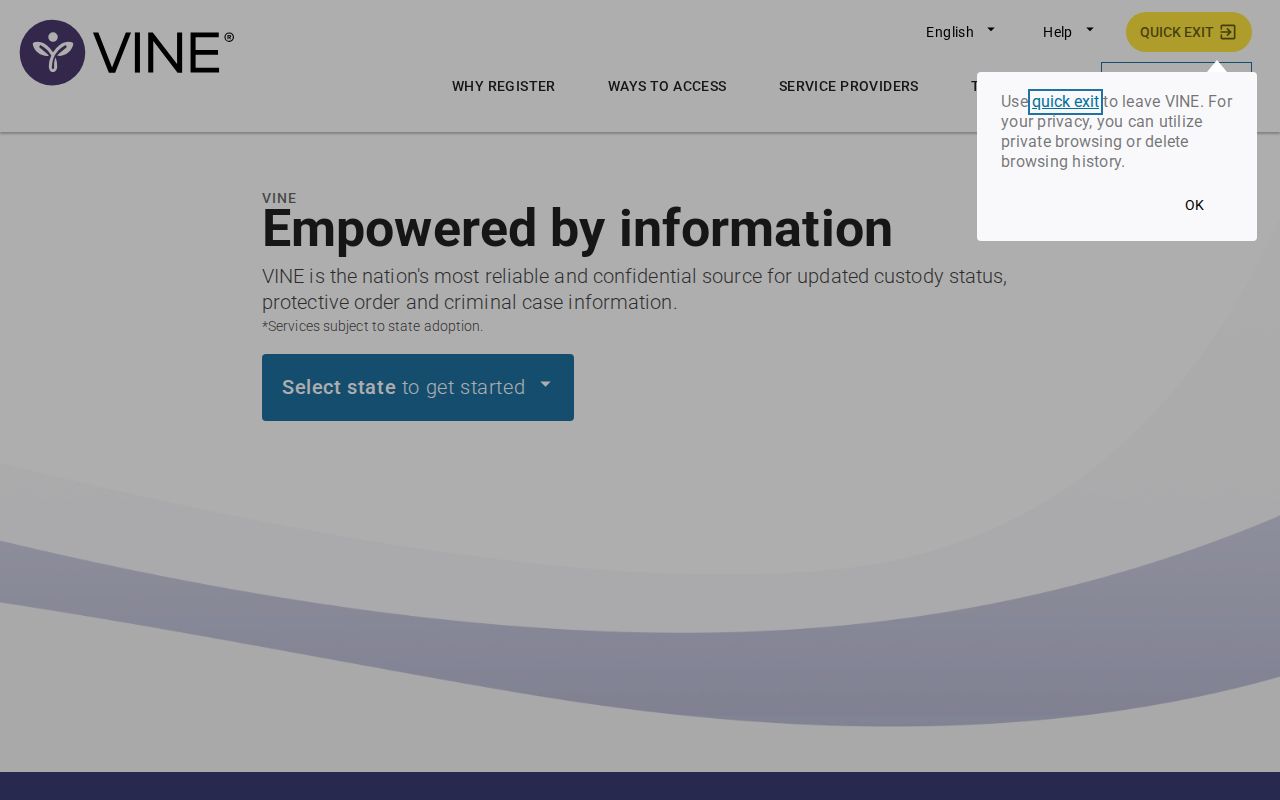
This view supports notification and custody follow-up, not a complete Graford case search or a finding of guilt.
How a Graford Arrest Record Splits
One Graford arrest can create several Graford-linked documents held by different offices. The arresting agency writes the Graford incident or arrest narrative. County jail staff create the intake and custody entry. A magistrate makes warning and bond records. If a prosecutor files a case, the appropriate clerk then maintains the charging instrument, docket events, judgment, and sentence.
Graford record path: Responding agency › Palo Pinto County jail › proper trial court › Texas Department of Public Safety.
Timing explains many apparent Graford record conflicts. A recent booking may appear before a charge is filed. A Graford arrest label can later be reduced, amended, dismissed, deferred, acquitted, or resolved by conviction. Texas DPS may receive a reportable arrest cycle and later disposition, but its public name product is narrower than the full local files. For current local custody, begin with the county roster. For the final Graford result, obtain the signed court disposition.
Graford Municipal Court Records
Historical Texas Office of Court Administration material has included a Graford municipal row, but the official sources inspected did not verify a current city court portal, clerk contact, fee table, or searchable docket. The safe course is to confirm present jurisdiction with the city or county rather than promise a Graford online case lookup that research did not find.
A fine-only county matter may instead belong with Justice Court Precinct 3. A Class A or B misdemeanor belongs with the Palo Pinto County Clerk, while a felony belongs with the District Clerk and 29th Judicial District Court. These categories matter more than the Graford mailing address on a notice.
| Court Name | No current Graford municipal court channel verified; Justice Court Precinct 3 is a documented local route when its jurisdiction applies. |
|---|---|
| Case Types Heard | Fine-only matters may fall in a municipal or Justice Court; Class A/B misdemeanors and felonies go to county-level courts. |
| Case Lookup Channel | Verify with the city or county, then contact the named court. No verified Graford public docket was found. |
| What the Docket Shows | When available, the court file can show the citation or charge, settings, plea, orders, and disposition. |
| Copies & Fees | No Graford city fee schedule was verified. Ask the current custodian before ordering copies. |
Graford Fine-Only Cases and JP3
Justice Court Precinct 3 serves from 328 N FM 2353 #2 in Graford. Its official county page should be used to verify the current telephone number before a trip. JP3 is a logical local contact for a qualifying fine-only county citation, but the citation itself remains the best source for the issuing court and cause details.
The official county officials and terms page helps confirm the public office structure.
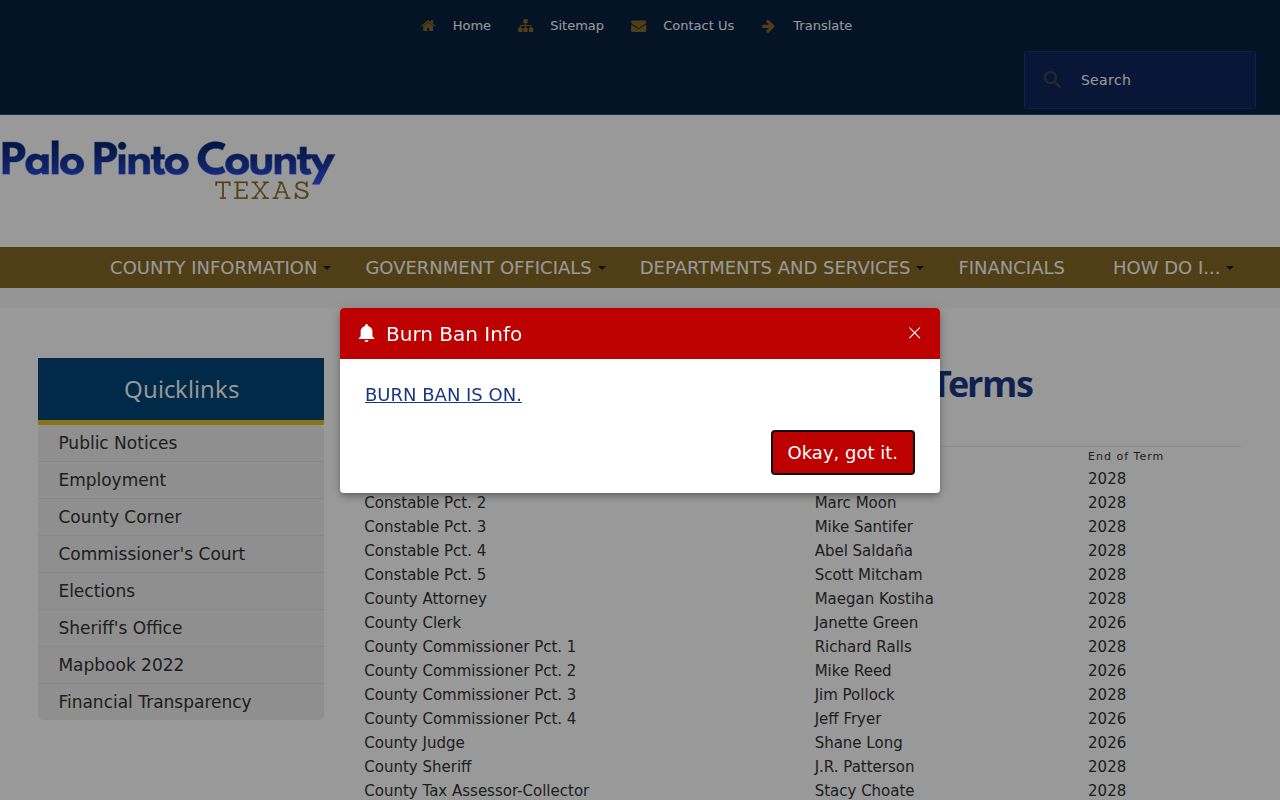
The county source gives Graford readers an official starting point without creating a city court portal that does not exist.
Do not send a felony file or Class A/B misdemeanor request to JP3 merely because the event happened near Graford. The County Clerk and District Clerk hold those higher-level case files at the county seat. If the issue is a warrant, verify it with the issuing court and do not rely on a shared name alone.
Where Graford Records End Up
Graford records do not follow a single city-owned pipeline. The first link is whichever agency created the report. The county jail may add a booking file, and a court adds the prosecution record only if a charge reaches that court. Courts and clerks then report eligible disposition data into the Texas criminal-history system.
Record flow: Graford-area responding agency › Palo Pinto County Courts › Texas Department of Public Safety.
A reader reviewing an older Graford event should compare the local incident report with the court disposition instead of treating one as the other. A DPS public search may show public conviction or deferred-adjudication information that reached the repository, but name matching can be ambiguous. For certainty about one’s own Texas record, follow the official fingerprint-based personal-review route. Broader county routing is covered in the Palo Pinto County criminal-history overview.
Graford Records After County Custody
The county roster answers whether someone from a Graford case is in Palo Pinto County custody. It does not track a person after transfer into Texas prison custody. The Texas Department of Criminal Justice provides separate name, TDCJ number, SID, email, and telephone routes. When no SID or TDCJ number is known, the published telephone process requires an exact date of birth.
The official TDCJ telephone information page documents that state-custody option.
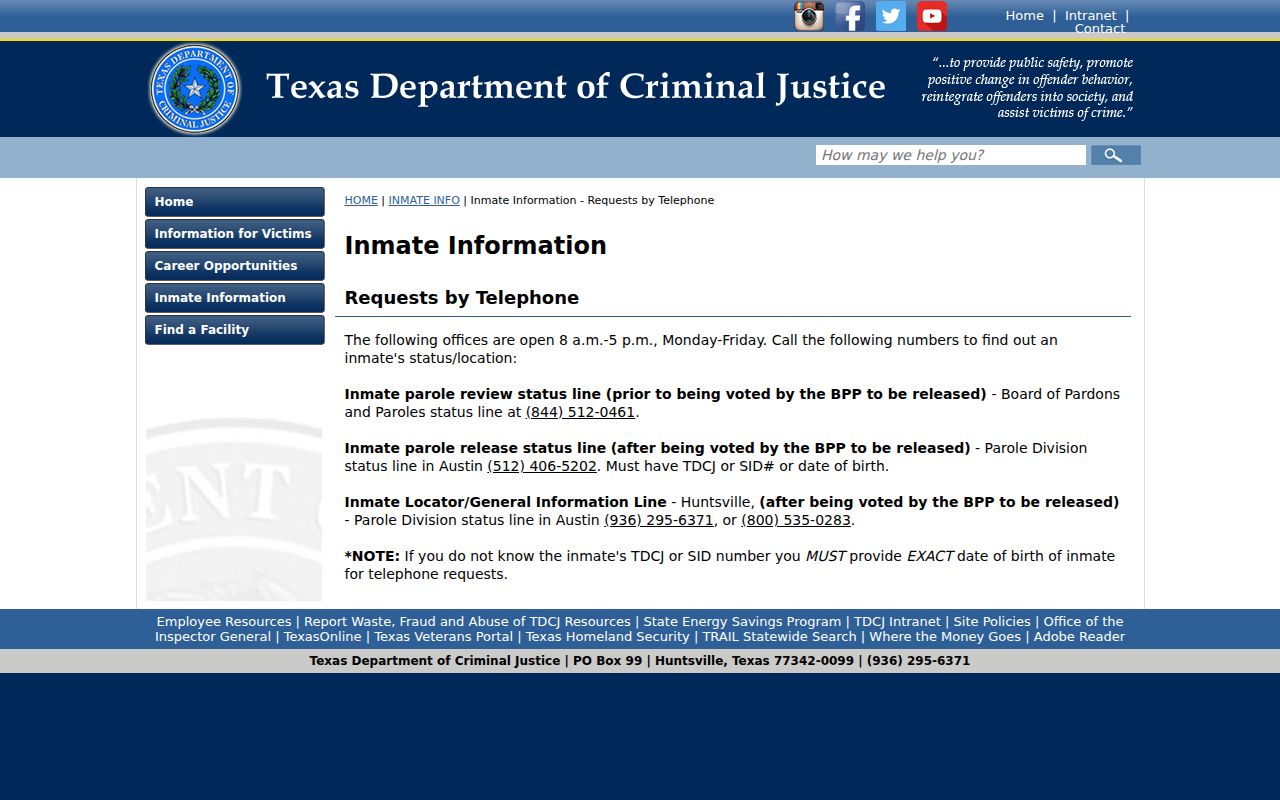
This channel should be used only when the Graford custody question has moved beyond the county jail layer.
Custody status still is not the same as a complete criminal history. A jail roster describes local intake, TDCJ describes state custody and related status, and the court judgment states the legal outcome. Keeping those products separate prevents a current-location search from being mistaken for the whole Graford case.
Graford Crime Figures Need a Boundary
The Texas Demographic Center estimated Graford at 699 residents after a 2020 Graford count of 669, about 4.5 percent growth. That Graford population change is local context, not proof of a change in crime. No separately verified municipal reporting identifier or independent Graford crime series was located in the sources inspected.
County Sheriff totals must not be presented as Graford statistics. Sheriff activity spans a much larger jurisdiction, and a Graford mailing address can cover land outside city limits. The same caution applies to bookings. A county jail entry may concern a Graford-area event, but the roster is not a city crime count and does not show a final conviction.
For a personal Graford record question, source documents are more useful than an unsupported city rate. Match the location, agency, charge, cause number, and signed outcome.
Public Access Rules
Graford incident records held by a Texas public agency are governed by the Texas Public Information Act, but access is not the same as automatic online publication. A written request should identify an existing record with the event date, location, agency, people involved when appropriate, and any report or service number. The custodian may redact or withhold protected juvenile, victim, or active-investigation information under applicable law.
Court records are generally open subject to sealing and confidentiality rules. DPS public criminal history has its own statutory scope and should not be confused with every Graford police narrative or court document.
Key Statutes:
Texas Government Code Chapter 552 generally makes government-held information available unless an exception or confidentiality law applies.
Texas Government Code Section 411.135 authorizes public access to specified DPS conviction and deferred-adjudication information.
Texas judicial access standards recognize presumptive court-record access while preserving sealing and confidentiality limits.
When a Graford record appears wrong, request the source document first. A signed disposition from the correct court is stronger evidence of the outcome than an arrest label or a name-only match.